Architecture in Egyptian civilization was theology you could walk through: every pylon, column and shaft of light meant something. Once you learn the grammar — five building types, a handful of symbols — every ruin in Egypt starts speaking. This is the traveler’s crash course, keyed to the sites where each idea stands.
Quick Answer: Ancient Egyptian architecture rests on five great forms: mastaba tombs, pyramids (their perfected evolution), cult temples for the gods (Karnak, Edfu), mortuary temples for dead kings (Hatshepsut, Medinet Habu), and rock-cut tombs (Valley of the Kings). Built in stone for eternity — while palaces and houses of mere mudbrick vanished — its language of pylons, columns and axial light shaped sacred building for 3,000 years.
The Rule That Explains the Ruins
Stone was for forever — gods and the dead. Mudbrick was for now — palaces, houses, even royal ones. That is why temples and tombs survive while whole cities melted back into the fields: what remains is exactly what Egypt built to remain.
The Five Great Forms
| Form | Purpose | Meet it at |
|---|---|---|
| Mastaba | Early bench-shaped tomb | Saqqara’s noble cemeteries |
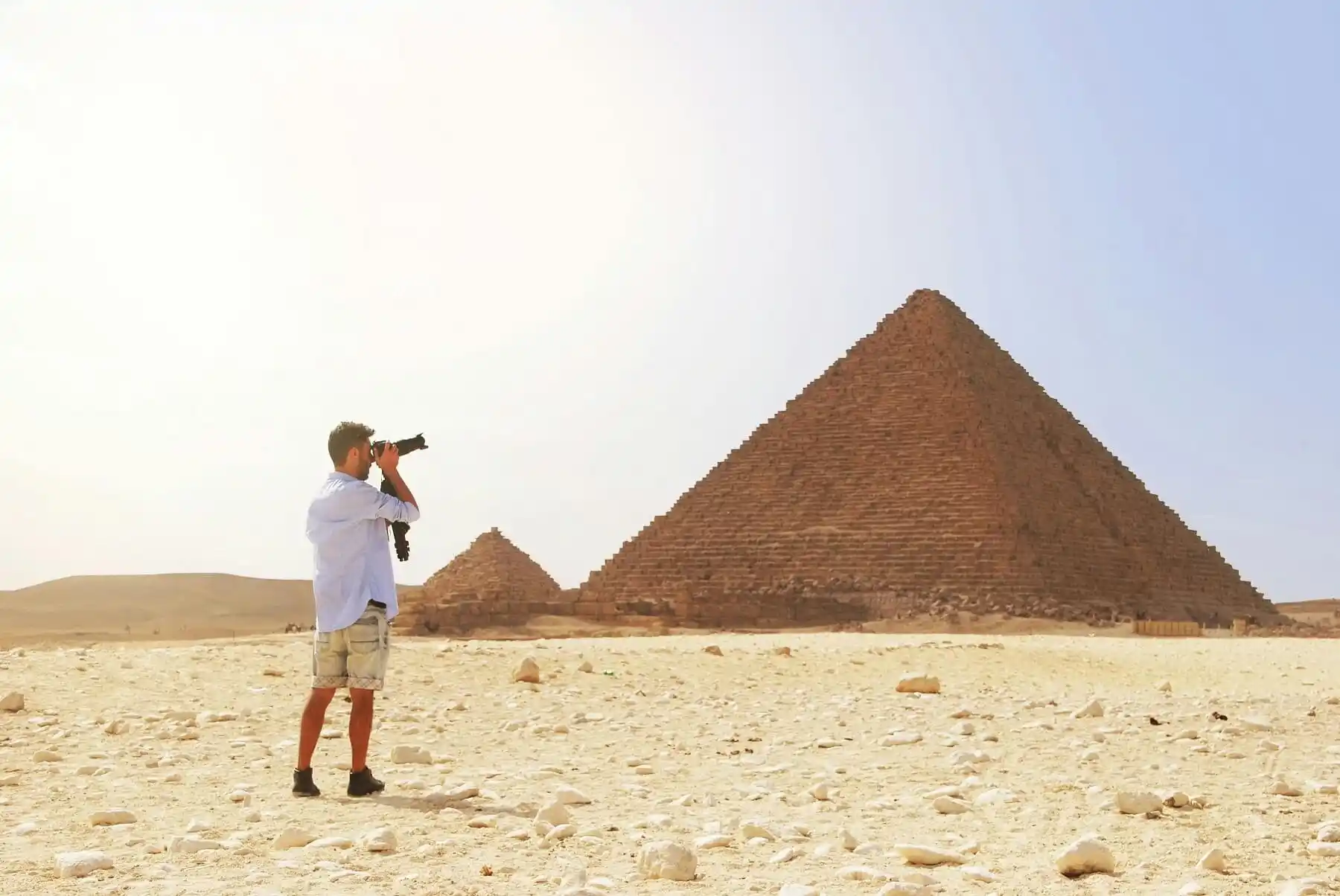
| Pyramid | Royal resurrection machine | Giza — explained here |
| Cult temple | A god’s eternal house | Karnak, Edfu, Philae |
| Mortuary temple | A dead king’s cult center | Hatshepsut, Medinet Habu |
| Rock-cut tomb | Hidden eternal apartment | Valley of the Kings, Abu Simbel |
Reading a Temple in Four Moves
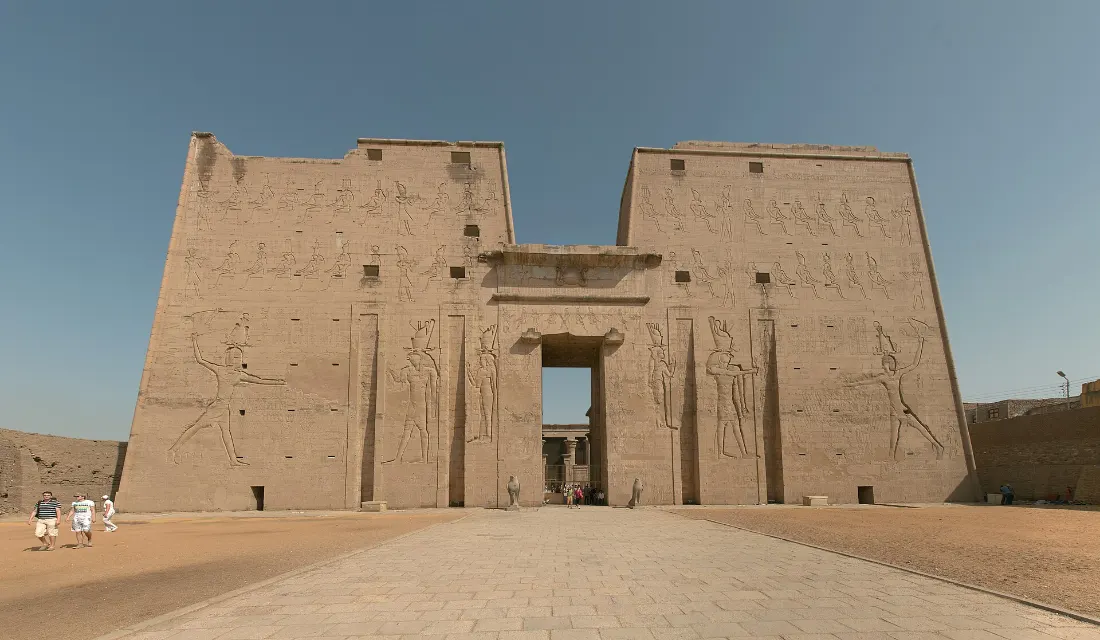
Every cult temple is the same sacred journey: pylon (the horizon hieroglyph in stone, king smiting enemies on its face) → open court (public festival space, full sun) → hypostyle hall (a stone papyrus swamp — creation’s marsh — in engineered twilight) → sanctuary (small, black, holiest: the god’s shrine at the temple’s first-mound heart). Light shrinks as holiness grows. Walk Edfu with this map and the building explains itself.
The Column Code
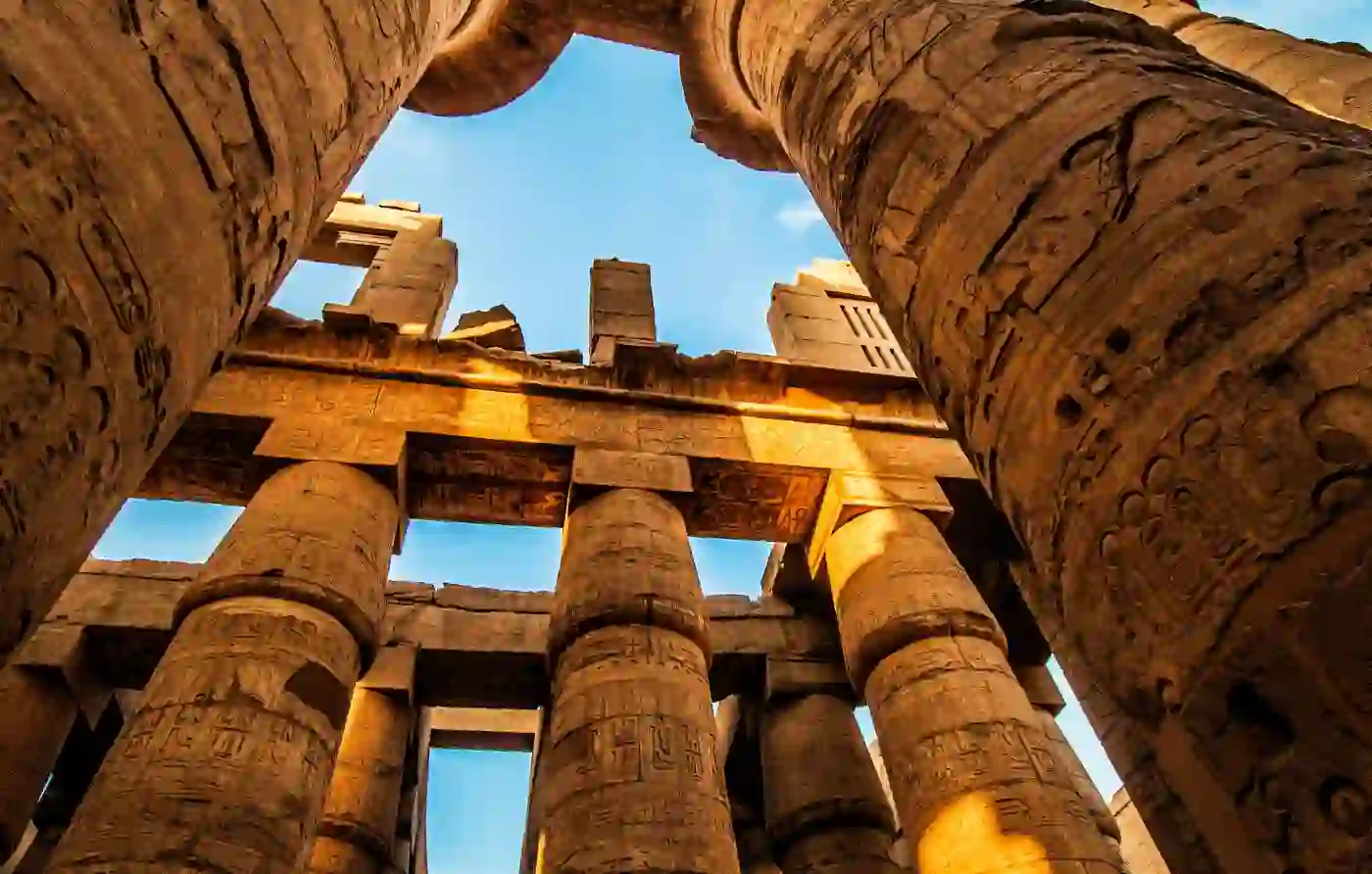
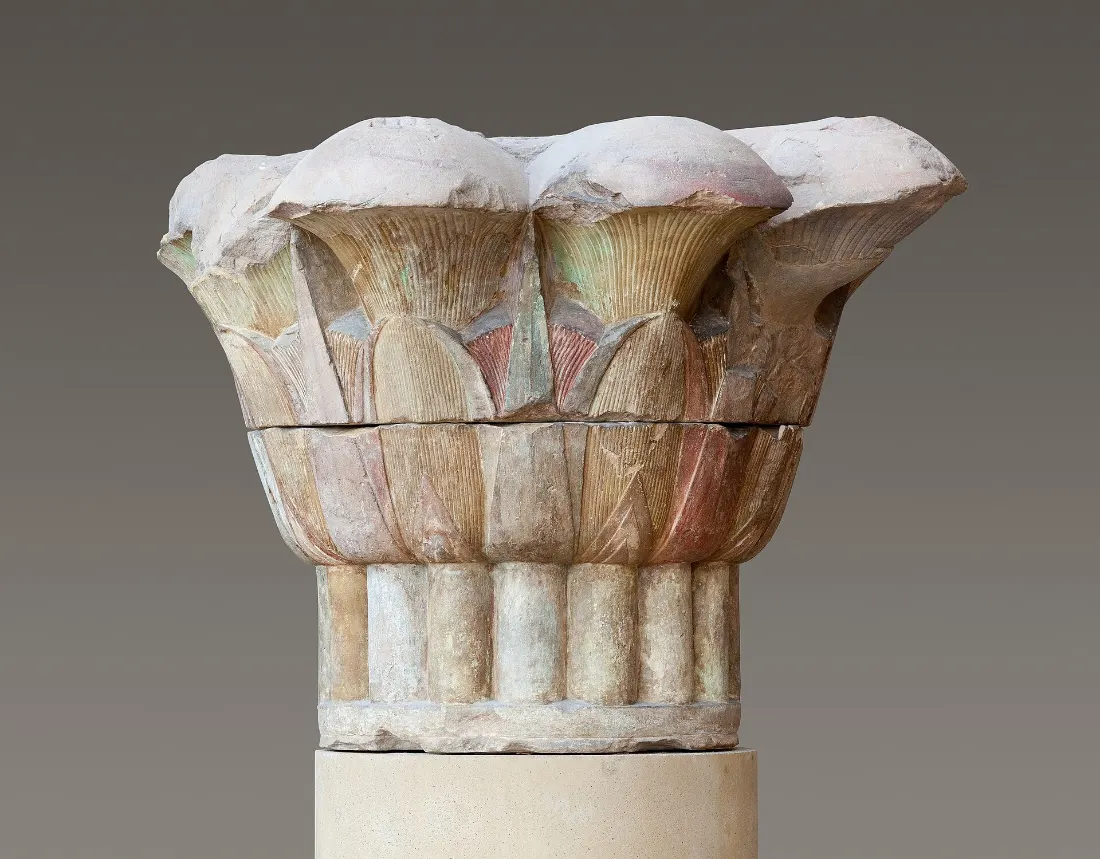
Columns are plants from the creation marsh: papyrus-bud and papyrus-open capitals (Karnak’s forest), lotus, palm, and Hathor-headed columns where the goddess smiles from the capitals (Dendera). Spot the species and you know the room’s dedication half the time.
Tricks Still Working After 3,000 Years
Axial alignment that fires sunrise into sanctuaries on chosen days (twice yearly at Abu Simbel); batter (inward-sloping walls) that reads as mountain-strength; clerestory light-slots pre-dating Gothic by two millennia; and 20-meter monoliths from Aswan’s quarries — the supply chain visible at the Unfinished Obelisk.
FAQs About Egyptian Architecture
Why did temples and tombs survive but not palaces?
Materials matched eternity: stone for gods and dead, mudbrick for the living — even kings.
What is a pylon?
The massive twin-towered gateway shaped like the horizon hieroglyph — the sun symbolically rises through it into the temple.
Which site shows the architecture best preserved?
Edfu — roof intact, the full light-journey experienceable as designed.
Did Egyptian architecture influence others?
Profoundly — Greek columns, sacred axiality and monumental stone all carry Egyptian DNA.
Want the grammar taught at the walls? Our Egyptologists turn ruins into readable text daily — Luxor tours here, WhatsApp anytime.